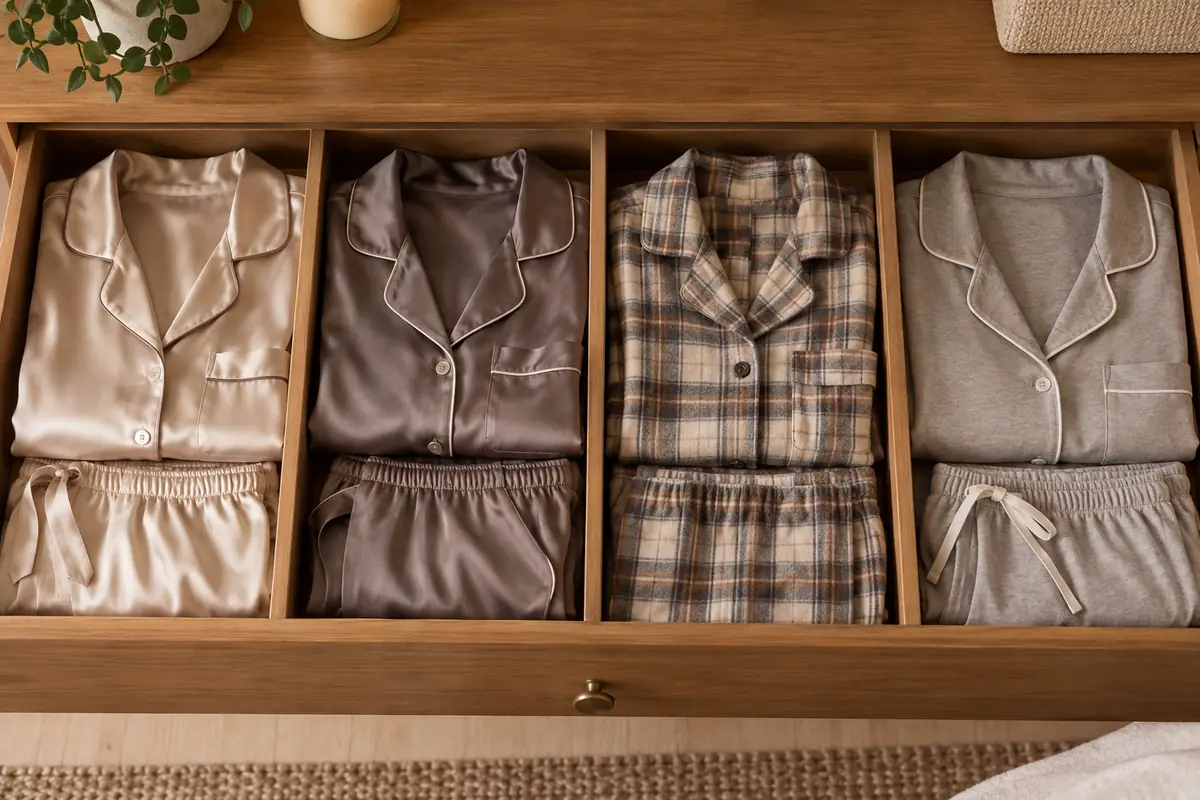
Most people own one favorite pajama set and three they tolerate. The result: laundry emergencies, fabric that wears out fast from constant washing, and that drawer of sleepwear guilt. A proper rotation fixes all three — and it takes fewer sets than you'd think.
The Magic Number: Three to Four
For everyday life: three sets minimum, four is ideal. One wearing, one in the wash, one resting, and (ideally) one seasonal alternate. Three sets washed on rotation last dramatically longer than one set washed constantly — fabric fibers break down from laundering as much as from wearing. Spreading the wash cycles across three sets can triple their lifespan.
The Seasonal Split
A balanced rotation across the year looks like:
- Two warm-weather sets: silk or lightweight cotton — breathable, moisture-friendly.
- One cool-weather set: flannel or heavier cotton — cozy without overheating.
- One wildcard: modal for the in-between months, or satin for the nights you want to feel put together.
Hot sleepers should weight the rotation toward silk and cotton year-round; cold sleepers can flip the ratio toward flannel.
Match Fabrics to Laundry Habits
Be honest about your laundry personality. If you live for a delicate cycle and folding ritual, silk will thrive with you. If laundry is a survival chore you do in bulk on Sundays, build the rotation from cotton, modal, and satin — all machine-washable — and keep silk for the set you'll actually hand-wash because you love it. The best rotation is one you'll actually maintain.
When to Retire Sleepwear
Sleepwear doesn't expire, but it does degrade. The retirement signals: thinning fabric (hold it to the light — if it glows, it's done), permanent pilling that softness can't hide, stretched-out necklines and cuffs that no longer recover, and any elastic that's given up. A set that's still decent but past its prime becomes the "sick day" set — every rotation needs one, and it keeps the good sets good.
Building It Without Breaking the Budget
You don't buy a rotation in one order. Start with the set you'll wear most (for most people: a mid-weight cotton or modal), then add one per season — a silk or satin set when you want to treat yourself, flannel heading into winter. Within a year you have a complete, deliberate rotation that cost less than one designer set and outlasts it.
The Capsule Sleepwear Wardrobe
If you want a formula rather than a philosophy, here's the capsule: one black silk set (the everything-piece: sleep, lounge, travel, guest-worthy), one modal set in a neutral (the everyday workhorse that survives any laundry habit), one flannel or heavy cotton set (November through March), and one satin set in a color you love (the mood-lifter that costs little and gets worn more than you'd predict). Four sets, zero redundancy, every use case covered. Everything beyond this is preference, not need.
Travel Simplifies Everything
A rotation earns its keep on trips. Silk is the travel fabric — it packs to nothing, washes in a sink, dries overnight, and looks composed enough for hotel breakfasts. One silk set plus one modal set covers any trip up to two weeks with one wash. The packing trick: roll, don't fold — silk and modal are the two fabrics most likely to come out of a suitcase looking like nothing happened to them.
Tracking What You Actually Wear
One honest week of attention beats any guide: notice which set you reach for when it's clean, and which one you avoid until it's the only option. The avoided ones are telling you something — wrong fabric for your sleep temperature, wrong fit for how you actually sleep, or just wrong vibe. Sell or donate them without guilt; a rotation of three sets you love beats five you tolerate. The goal was never more pajamas. It was never thinking about pajamas at all.
The Laundry Schedule That Makes It Work
A rotation needs a rhythm, so here's the low-effort version: wash sleepwear weekly, all together, cold — one load, one ritual. Silk goes in mesh bags (or gets its five-minute hand wash on Sunday night, which becomes oddly meditative). Everything air-dries over the bathroom door by morning. The whole system costs twenty minutes a week and means you never wear yesterday's pajamas again unless you choose to. People who "hate laundry" usually hate unplanned laundry; a fixed weekly rhythm removes the planning, which was the actual burden.
Seasonal Storage for the Off-Season Sets
Flannel in July and silk-in-summer both need a home. Wash everything before storage (body oils attract moths even to synthetic-blend sets), fold loosely along existing seams, and store in a breathable cotton bin or pillowcase — never vacuum plastic, which compresses fibers and traps moisture. A cedar block or lavender sachet handles pest prevention without chemical smell. When the season turns, one wash cycle revives everything, and the rotation re-balances itself for the new temperature.
The deeper point: pajamas are the first thing you put on and the last thing you take off. A rotation of pieces you actually like makes both ends of the day slightly better — and that's a strangely high return on a drawer of sleepwear.