Silk has a reputation for being difficult. It isn't — it's just specific. Wash it like wool (another protein fiber) and it'll outlast everything else in your drawer. Wash it like cotton and you'll find out the hard way. Here's the complete routine, including the mistakes that actually cause damage.
The Golden Rules
- Cold water only. Heat is the fastest way to shrink, dull, or warp silk fibers. 30°C or below, always.
- pH-neutral detergent. Regular detergent is alkaline and breaks down silk protein. Use a silk/wool detergent or a tiny drop of gentle baby shampoo.
- Never bleach. Even color-safe bleach degrades silk fiber. Stain-treat with a drop of detergent worked in gently instead.
Hand Washing (the default)
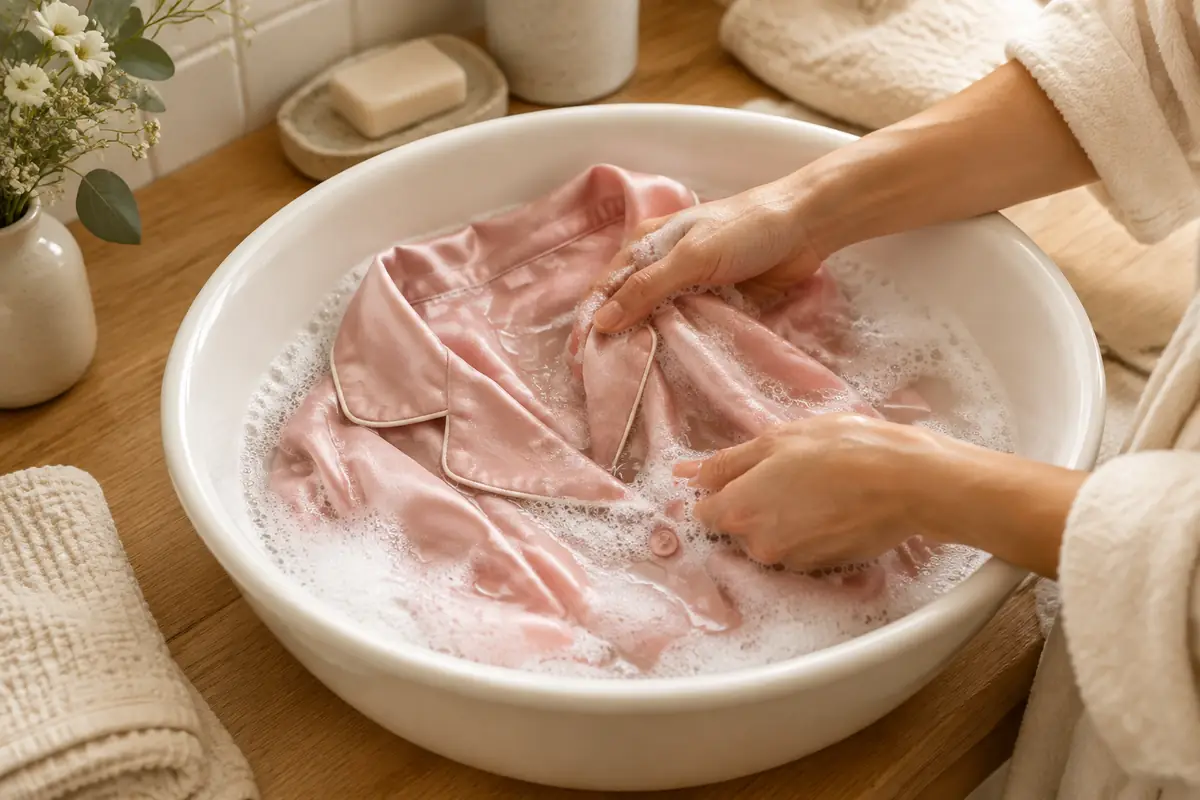
- Fill a basin with cold water and dissolve a small amount of silk detergent.
- Submerge the pajamas and gently agitate for 2–3 minutes. No wringing, no scrubbing — pressure and friction are what dull the sheen.
- Rinse in cold water until the water runs clear.
- Press (don't wring) the water out — lay the garment flat on a clean towel, roll the towel loosely, and press. The towel takes most of the moisture.
- Dry flat or on a padded hanger away from direct sunlight and heat vents.
Total active time: about five minutes. Most people build it into their evening routine.
Machine Washing (when you must)
Yes, it's possible — with precautions. Use a mesh laundry bag, the delicate or hand-wash cycle, cold water, and the slowest spin speed. Wash silk with silk, never with anything zipped, velcroed, or rough. Skip the fabric softener: it coats the fibers and dulls the natural sheen you bought silk for.
Drying and (Almost) Never Ironing
Air drying is the only method. Hang or lay flat — a dryer will shrink and dull silk in one cycle, no exceptions. The good news: silk's natural drape means wrinkles relax as it dries. If you must press, use the lowest heat setting, press on the reverse side, and put a cloth between the iron and the fabric.
Storage
Silk breathes, so it hates plastic bins and dry-cleaning bags — stored that way, it yellows. Keep sets folded in a drawer or on a padded hanger in the closet, away from direct light. For long storage, a breathable cotton garment bag is ideal. Cedar blocks nearby deter moths without the chemical smell of mothballs.
The Mistakes That Ruin Silk
- Regular detergent — the alkalinity breaks down fibers over time. This is the #1 silk killer.
- The dryer — one cycle is enough to shrink a set a full size.
- Perfume and deodorant contact — alcohol-based products stain silk. Let them dry before dressing.
- Wet-spotting panic — water spots dry on their own; rubbing them makes it worse.
Between Washes
Silk is naturally odor-resistant — the same smooth fiber that's gentle on skin doesn't hold bacteria the way cotton does. Air the set out overnight between wears and most sets need washing only every 3–4 wears. Less washing, longer life.
Dealing With Common Stains
Body oil and lotion: the most common silk stain, and the easiest — a drop of dish soap (which cuts grease) worked gently into the spot before a cold hand wash. Makeup: same approach; don't rub, press the detergent in with a fingertip. Wine or juice: blot immediately (never rub), then cold-water wash the same night. Blood: cold water only — heat sets protein stains permanently — and hydrogen peroxide sparingly on white silk only. The universal rule: the faster you treat, the less dramatic the treatment needs to be.
Travel and Hotel Stays
Silk pajamas are the best travel companions precisely because they're light and wash in a hotel sink. The routine: a drop of travel-size shampoo in the sink, a five-minute soak, rinse, roll in a bath towel, hang by the open window. They're dry by morning in most hotel climates — faster than any synthetic, because silk releases moisture rather than holding it. One set can cover a two-week trip with three washes.
What "Dry Clean Only" Actually Means
Most silk sleepwear labeled dry-clean-only can absolutely be hand-washed — the label is often liability caution rather than necessity. Structured silk garments (blazers, anything with interfacing) genuinely need dry cleaning. Pajamas, camisoles, and robes with no structure wash beautifully by hand. When in doubt, test a hidden seam with a drop of water: if the fabric dries without a water spot or color change, hand-washing is safe. We've tested every silk piece we sell; all of them hand-wash perfectly.
Follow the routine and silk pajamas don't just last — they get better, softening and draping more beautifully in year two than they did on day one. That's the whole case for buying the real thing.