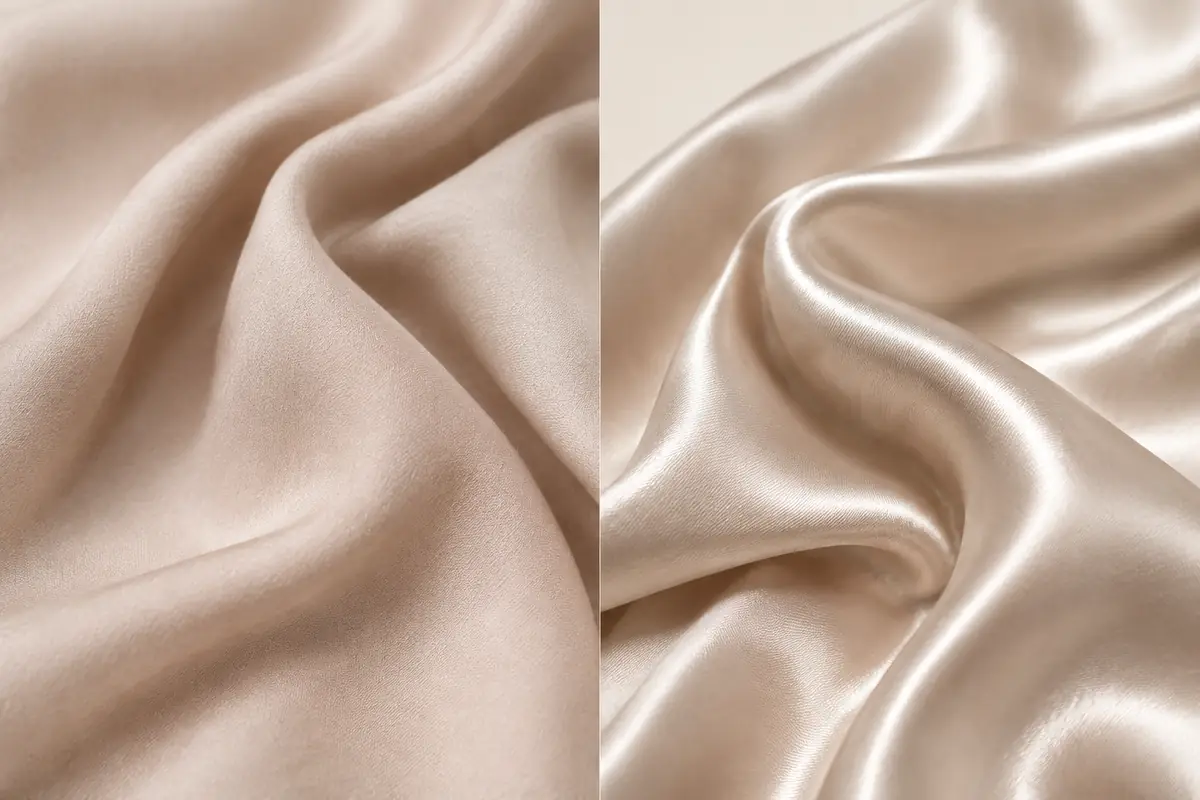
They look similar on a product page. They feel similar for the first ten minutes. But silk and satin are fundamentally different things, and choosing between them comes down to how you sleep, how much maintenance you'll actually do, and what you're willing to spend. Here's the honest breakdown.
The Core Difference
Silk is a fiber. It's spun by silkworms, and quality sleepwear uses grade-A mulberry silk measured in momme (mm) — a weight standard like thread count for cotton. 19 momme is the sweet spot for pajamas: substantial enough to drape beautifully, light enough to wear year-round.
Satin is a weave. The satin weave — long floats of thread that create that glossy face and slippery hand — can be made from any fiber. Most affordable satin pajamas are polyester satin: the same weave, a synthetic thread. There are also silk-satin blends and charmeuse, which is satin-woven silk.
So "silk vs satin" is really "natural fiber vs synthetic weave." Both can feel luxurious. They behave differently where it counts.
Breathability and Temperature
This is silk's superpower. As a natural protein fiber, silk breathes — it releases heat and moisture instead of trapping it. That's why silk feels cool when you get into bed and neutral an hour later: it regulates rather than insulates. Hot sleepers and anyone who deals with night sweats genuinely benefit.
Polyester satin doesn't breathe the same way. It feels cool on first contact (that slippery slickness) but can get clammy over a full night because moisture has nowhere to go. If you sleep warm, silk earns its price premium every single night.
Skin and Hair Benefits
Both fabrics reduce friction against skin and hair compared to cotton — that's real, not marketing. Fewer sleep creases, less hair breakage, no cotton fibers snagging. Silk adds one more benefit: it's hypoallergenic and naturally resistant to dust mites, which matters for sensitive skin. Polyester satin is inert but not hypoallergenic in the same way.
Care: Where They Diverge
- Silk wants hand-washing in cold water with pH-neutral detergent, or a gentle machine cycle in a mesh bag. Air dry away from sun. It's not high-maintenance, but it is specific — bleach and high heat will ruin it.
- Polyester satin is nearly indestructible: machine wash cold, tumble dry low, no drama. If laundry effort is the deciding factor, satin wins on convenience.
Price and Longevity
Real silk pajama sets run roughly $80–$150; quality satin sets run $25–$50. But cost-per-wear tells a better story: a 19-momme silk set that's hand-washed and stored properly lasts for years and often looks better at year three than cheap satin does at month three (which pills and loses shine as the synthetic fibers abrade). Silk is the buy-once option; satin is the easy-everyday option.
Which Should You Buy?
- Buy silk if: you sleep hot, have sensitive skin, want the hypoallergenic benefits, or you're buying a gift that should feel like an heirloom.
- Buy satin if: you want the look and slip for a fraction of the price, you hate hand-washing, or you're building a rotation of everyday sets.
How to Spot Real Silk in Ten Seconds
Because "silk-feel" gets used loosely, here's the quick test. The touch test: real silk feels cool to the touch and warms slowly against skin; polyester satin feels slick at first contact but never quite cools. The drape test: lift a corner — silk falls in soft, liquid folds; polyester satin holds slightly sharper creases. The label test (the only one that matters): real silk is labeled "100% mulberry silk" with a momme weight. If a product page says only "silk-feel" or "satin," it's polyester. That's not always bad — satin is a legitimate choice — but the price should match the material.
The Momme Question
Momme (mm) is silk's weight standard, and it's the number that separates good silk from disappointing silk. 12–15 momme feels thin and looks slightly translucent; 19 momme is the sleepwear sweet spot — opaque, drapey, durable; 22+ is luxury bedding territory and can feel heavy as pajamas. If a silk set doesn't publish its momme, assume it's low. We publish ours on every product page because it's the single best indicator of silk quality.
A Practical Ownership Test
Still torn? Ask yourself three questions. One: do you sleep hot? (Silk wins decisively.) Two: will you actually hand-wash, or does laundry happen in bulk on Sundays? (Satin wins on convenience.) Three: is this a piece you want to still own in five years? (Silk ages into its best self; satin wears out on a schedule.) Two or more answers pointing the same direction — that's your answer.
Plenty of our customers own both: silk for the nights that matter, satin for the rest of the week. That's not a compromise — it's a wardrobe.